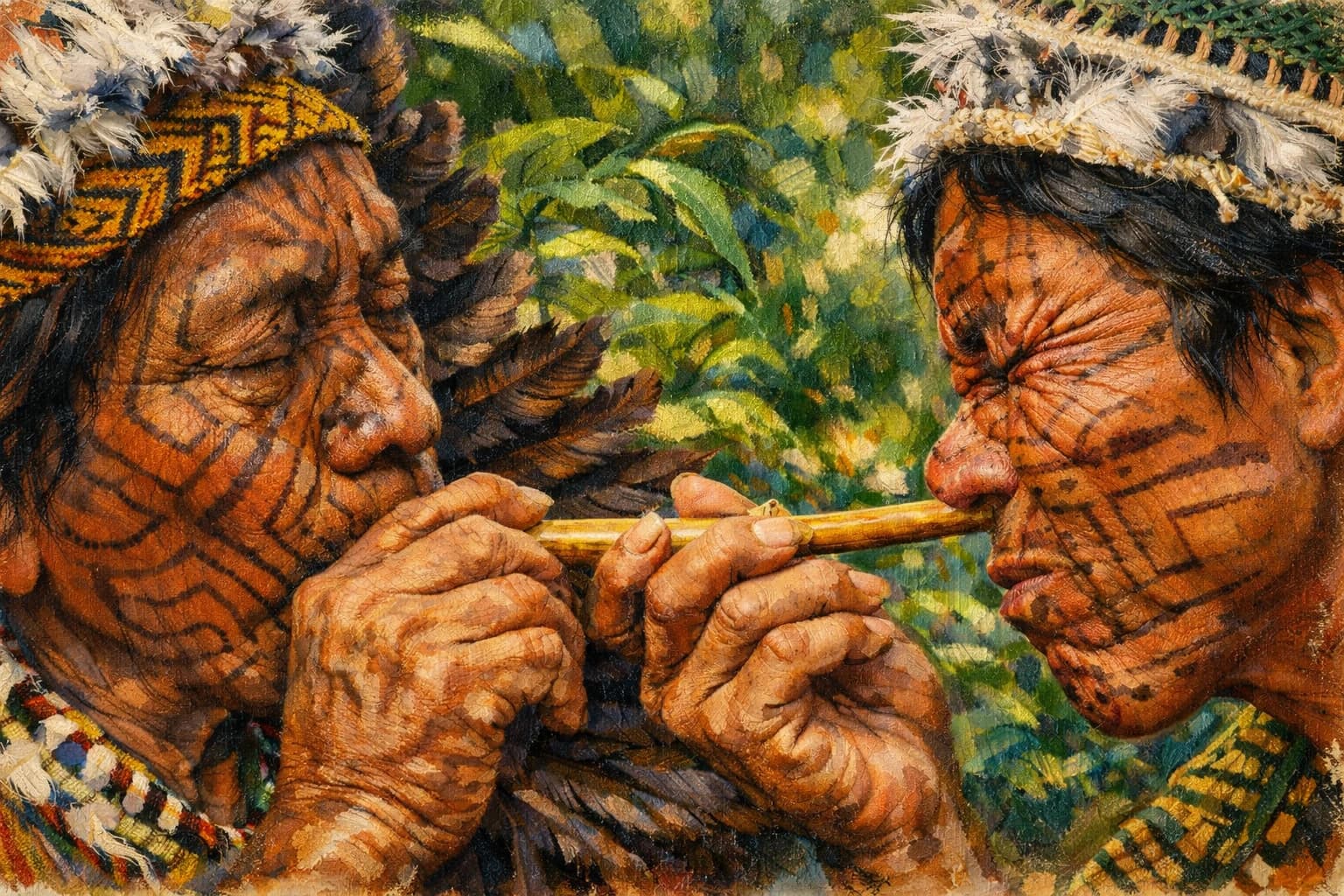

Sananga is not gentle medicine. Anyone looking for a soothing magic remedy will find themselves quite surprised by their first encounter with it. It is a traditional Amazonian eye medicine, extracted from the roots and stem bark of the Tabernaemontana undulata shrub. Indigenous tribes such as the Yawanawá, Huni Kuin, and Katukina have used it for generations.
Its purpose is not limited to treating physical vision alone — Sananga is a cutting tool for deep cleansing of the energetic and mental field, compelling us to meet our resistance mechanisms face to face.
The Biochemistry of Sananga: The Connection to Iboga
To understand why Sananga is so potent, we need to look at the botany. The Sananga shrub belongs to the Apocynaceae (dogbane) family, making it a botanical relative of the African Iboga plant.
Although Sananga eye drops are not psychoactive and do not cause hallucinations, they contain a cocktail of powerful alkaloids — including Coronaridine. These alkaloids work at the cellular level for detoxification, promote strong local blood flow, and affect receptors in the central nervous system. They don't merely flush the physical cornea — they perform a kind of "hard reboot" of neural pathways. For further reading on alkaloids in Amazonian medicine, see our guide on the biochemistry of Kambo.
The Physiology of Pain: Vagus Nerve Reset
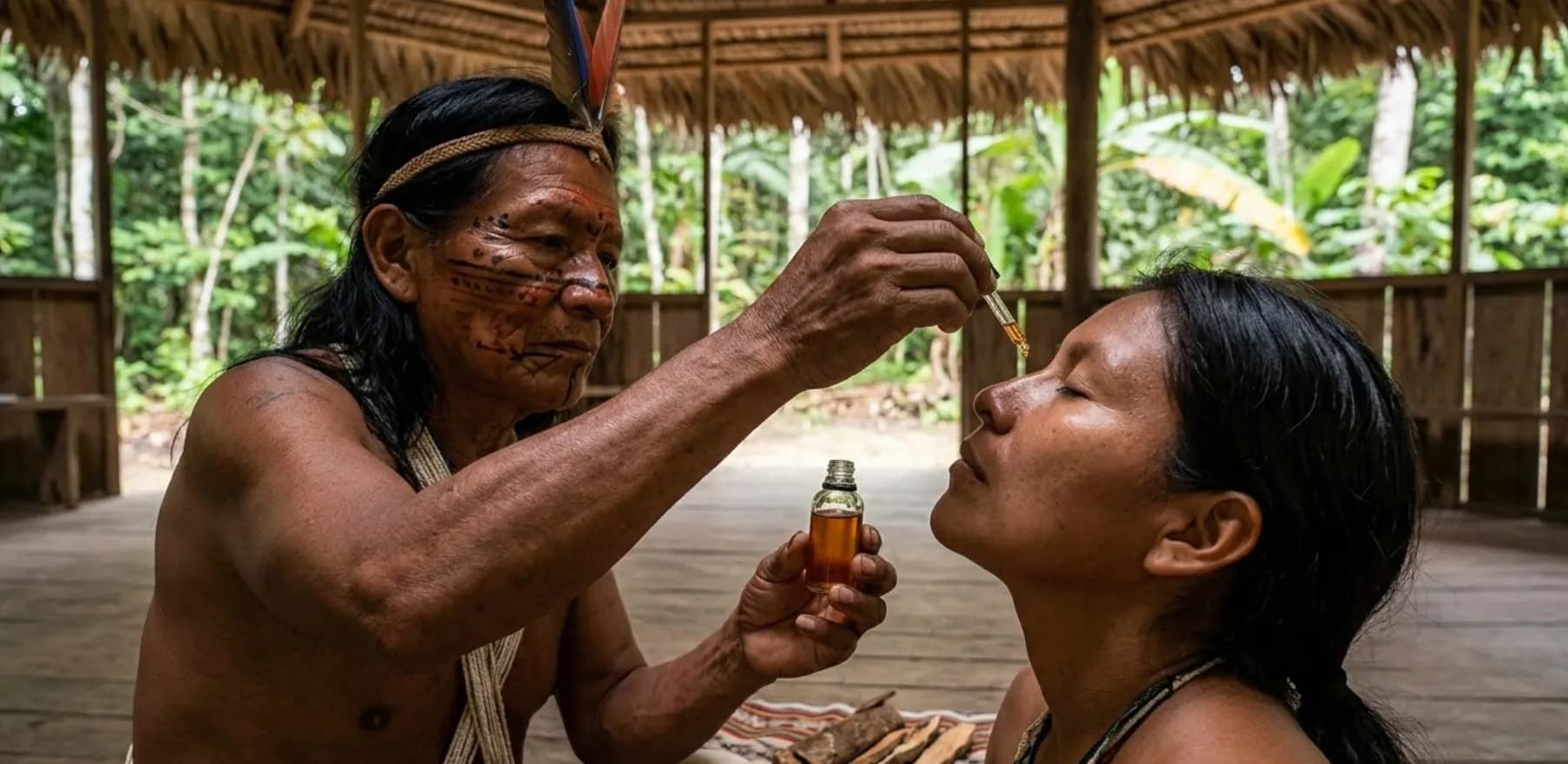
When Sananga drops touch the eyes, the immediate response is intense burning. This is precisely where the healing mechanism lies: the pain is not a side effect — it is the activation condition.
At the moment of burning, the body's sympathetic nervous system (Fight or Flight) surges. The natural tendency is to clench the face, hold the breath, and resist. The real work in the treatment is forcing the body to release. The moment you stop fighting the sensation and agree to breathe into the fire, you actively engage the Vagus Nerve and force the parasympathetic nervous system (Rest and Digest) into action, overriding the stress response. This is a direct neurological reset through controlled pain exposure.
Panema and Deep Emotional Release
In Amazonian medicine, there is extensive reference to "Panema" — heavy, murky, or stuck energy that accumulates in a person's field, generating bad luck or confusion. Sananga specializes in breaking down these blockages.
Many patients discover that the tears flowing during treatment are not merely physical tears meant to flush the eye. The fire of Sananga opens deep-seated emotional blockages — suppressed anger, grief, or trauma encoded in the body. The rapid transition between intense burning and the absolute silence that follows leaves the brain without "background noise." The result is clearer vision, allowing one to see life situations without the fixed filters of fear or anxiety.
Sananga Within the Treatment Framework: Kambo and Rapeh
In clinical practice, Sananga integrates naturally with other Amazonian medicines and prepares the ground for deeper work:
- Combined with Kambo: A Sananga treatment given before a Kambo ceremony helps the patient ground sharply, release initial resistances (and early fears), and arrive at the physical phase of Kambo with focus and willingness to surrender. For more details on the process, see our guide on the Kambo process.
- The Connection to Rapeh: Similar to Rapeh, Sananga cuts through dissociation and demands absolute presence in the physical body, here and now.
Learn more about who Kambo treatment may be right for.
Practice: Storage and Potencies (The Practical Side)
Sananga is a living medicine. Unlike Rapeh, which is a dry and stable powder, Sananga drops are a liquid extract containing active plant compounds.
- Maintenance and refrigeration: The bottle must be kept refrigerated. If Sananga is left out in heat for extended periods, it may ferment, sour, and lose its efficacy (or cause unwanted irritation).
- Potency levels: Different levels of Sananga exist (mild, medium, strong), determined by the type of root, cooking time, and the specific tradition of the preparing tribe (for example, Yawanawá preparations often differ in potency from those of the Huni Kuin). In clinical practice, the potency should be matched to the patient's experience and sensitivity.
Medical Contraindications: Who Should Not Take Sananga?
Sananga use is safe for healthy individuals, but since it involves introducing active botanical compounds into the eye and creating local pressure and irritation, there are medical conditions where use is strictly prohibited:
- After recent eye surgeries (including laser vision correction or cataract surgery).
- Past or present retinal detachment.
- Advanced-stage glaucoma.
- Open wounds, scratches, or corneal ulcers.
- Acute eye infections (viral or bacterial) at the time of treatment.
In any case of doubt or complex eye medical history, consult a specialist ophthalmologist before any treatment.
Questions and Answers
With proper use and accepted dosages, no. Despite the intense burning sensation that feels like "fire," Sananga does not wound or scratch the cornea. Instead, it triggers a natural cleansing process that promotes blood flow and tears in the eye area.
Peak burning typically lasts between 2 to 5 minutes, depending on the extract strength (mild, medium, or strong) and the individual sensitivity of your nervous system. Afterward, the sensation gives way to deep relief and clarity.
No. Contact lenses must be removed before treatment to allow the drops to flush the eye smoothly and prevent trapping the active plant compound under the lens (which could cause prolonged and dangerous irritation).
It is recommended to wait at least 20 to 30 minutes after treatment before driving. Allow your eyes to return to normal, stop tearing completely, and ensure your field of vision has stabilized and returned to full focus.